
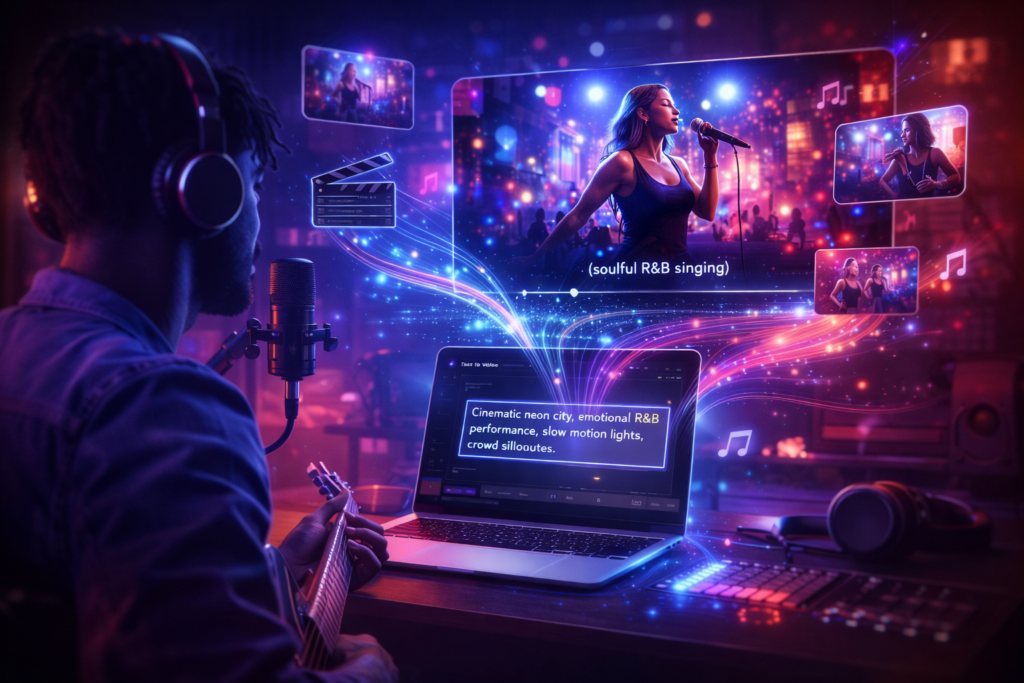
Recording a track is only half the job today. Once a song leaves the studio, it competes in a visual world shaped by YouTube, TikTok, Instagram, and streaming platforms. Listeners do not just press play. They watch. For independent artists and producers, this creates a new challenge. How do you move from finished audio to a compelling visual story without hiring a full production crew?
This is where a music video maker powered by AI enters the workflow. Instead of managing cameras, editors, animators, and voice actors separately, artists can now generate structured, scene-based videos using simple text prompts. The result is a faster path from studio session to screen release, without sacrificing creative control.
Why Use a Music Video Maker?
An AI-powered music video maker helps artists transform a song into a complete visual narrative in minutes. By entering a text prompt that describes the mood, theme, or storyline, the system can:
- Draft a script aligned with the lyrics or concept
- Generate visual scenes using stock or generative media
- Add background music layers or sound effects
- Create voiceovers and subtitles automatically
- Structure the final edit into a ready-to-publish format
Instead of separating music production from visual production, artists treat them as one continuous creative process.
This matters because video dominates digital engagement. According to Forbes, video remains one of the most consumed content formats across platforms. For musicians, that means visibility often depends on how quickly and consistently they can pair sound with visuals.
An AI-driven music video maker simplifies that transition, allowing artists to focus on storytelling rather than technical editing.
How Has Visual Content Become Essential for Artists?
The shift from audio-only to audiovisual
In the past, radio and physical albums defined distribution. Now streaming and short-form platforms shape discovery. As noted on Wikipedia, music videos have long influenced cultural trends, but today they are often the first touchpoint for a new audience.
Modern music is rarely experienced in isolation. Fans encounter it through reels, lyric videos, performance clips, and visualizers. That shift affects how songs are structured and promoted.
Artists now consider:
- How the hook looks visually
- Whether the chorus works in a 30-second clip
- How imagery reinforces the theme
Why speed matters in the release cycle
Trends move quickly. Social platforms reward consistency. If a track gains traction, artists need supporting visuals immediately. Waiting weeks for post-production can slow momentum.
AI video creation tools allow:
- Rapid concept testing
- Multiple versions of the same track
- Lyric and performance variations
- Localization for global audiences
This flexibility supports both independent musicians and larger production teams.
Can AI Turn Text into Music Videos?
Yes, and the process is more structured than many expect.
When using a music video maker, the system typically follows a layered workflow:
- Script generation based on song theme
- Scene breakdown into visual segments
- Asset matching or generative image creation
- Automatic transitions and pacing
- Subtitle and caption integration
- Audio syncing and sound effects
Instead of editing frame by frame, artists define intent. The platform handles composition and timing.
For example, a prompt like “moody neon cityscape with reflective piano ballad energy” can lead to a cohesive sequence of stylized visuals, animated typography, and atmospheric lighting effects. The artist then refines tone and pacing before export.
This approach does not replace creative judgment. It removes repetitive production tasks so creators can spend more time refining artistic direction.
How Music Video Makers Help Indie Artists?
Independent musicians often work within tight budgets. Hiring videographers, renting equipment, and booking locations can cost thousands. AI tools reduce that barrier.
In creative workflows today, artists use a platform like invideo when they need a streamlined music video maker that converts simple text prompts into structured scenes, voiceovers, subtitles, and synchronized visuals. Instead of outsourcing every step, they can test ideas internally before committing resources to large-scale shoots.
This shift allows:
- Faster experimentation with different aesthetics
- Consistent branding across releases
- Visual storytelling aligned with personal style
Some creators also explore a free AI video app during early development stages to validate concepts before upgrading to more advanced features. The key is accessibility. Artists control their timeline and creative pace.
How AI Visuals Impact Music Production
Integration within the creative process
Music production used to end when mastering was complete. Now, visuals often influence arrangement decisions. Producers think about how drops, tempo shifts, and instrumental breaks will look on screen.
With AI video tools integrated early, artists can:
- Align scene transitions with beat drops
- Match color grading to emotional tone
- Preview how subtitles flow with rhythm
This tight feedback loop shapes more cohesive releases.
Expanding creative experimentation
Generative media also opens stylistic possibilities that might be unrealistic with traditional filming. Surreal environments, animated characters, or abstract visual metaphors can be built digitally without physical sets.
For artists exploring themes like identity, memory, or even Music as a therapy, abstract visuals can reinforce emotional depth. A calm instrumental track might be paired with slow-moving nature sequences or soft animated gradients, enhancing the listening experience without requiring complex shots.
How Can Artists Use a Music Video Maker Strategically?
A music video maker works best when used with intention rather than as a shortcut. Strategic use involves planning distribution alongside production.
Artists can create:
- Full-length official videos for YouTube
- Short teaser clips for Instagram and TikTok
- Lyric videos for streaming platforms
- Visual backdrops for live performances
- Promotional snippets for paid ads
Instead of producing one asset per song, they can generate a library of visual content from a single concept.
This also helps align with data-driven strategies. Platforms reward consistency and engagement. By producing multiple visual formats quickly, artists increase surface area for discovery.
Music production is no longer isolated from marketing. The visual layer plays a direct role in reach and retention.
Does AI Shape Artist Development?
Technology does not replace talent, but it reshapes opportunity. As access improves, more artists can compete on presentation quality.
Key long-term implications include:
- Lower entry barriers for emerging creators
- Faster global distribution
- Visual personalization for niche audiences
- More frequent release cycles
For independent musicians in particular, AI video tools offer control. Instead of waiting for label budgets, artists can test and publish content independently.
At the same time, professional production teams use these tools for rapid prototyping. They build concept drafts, mood boards, and preliminary edits before moving into high-budget shoots.
In both cases, the music video maker becomes part of the toolkit rather than a replacement for artistic vision.
Conclusion
Moving from studio to screen no longer requires a complex production chain. A well-designed music video maker allows artists to transform text prompts into fully structured visual experiences that include scripts, scenes, subtitles, voiceovers, and synchronized sound design.
For independent musicians, this means faster releases and greater creative autonomy. For established producers, it supports experimentation and rapid prototyping. The technology integrates naturally into modern music production, helping artists align sound and visuals from the earliest stages of creation.
As audiences continue to consume music visually, tools that simplify this transition will remain central to how songs reach and resonate with listeners.
FAQ
1. What does a music video maker actually do?
A music video maker uses AI to convert text prompts into complete video projects. It can generate scripts, create scene sequences, add subtitles, synchronize audio, and export ready-to-publish content. Instead of manual editing, users guide the creative direction through descriptive input.
2. Is a music video maker only for beginners?
No. Independent artists use it to reduce production costs, while professional teams use it for rapid prototyping and concept drafts. It supports different experience levels by automating technical steps while leaving creative control with the user.
3. Can I customize visuals generated by AI?
Yes. Most platforms allow adjustments to scene order, transitions, captions, color themes, and pacing. Users can refine outputs after the initial generation to align with branding or artistic direction.
4. Does AI replace traditional video production?
Not entirely. It complements traditional production. Artists may use AI tools for lyric videos, teasers, and concept drafts while still investing in cinematic shoots for major releases.
5. How long does it take to create a video using AI tools?
Depending on complexity, a basic structured video can be generated in minutes. Refinements and customization may take additional time, but the process is significantly faster than traditional editing workflows.
6. Can AI-generated videos support live performances?
Yes. Artists often create visual backdrops or looping visuals using AI video tools. These assets enhance stage presence without requiring custom animation teams.
7. Is this suitable for all music genres?
Most genres can benefit from electronic and hip hop to acoustic and instrumental. The flexibility of prompts allows artists to tailor visuals to mood, tempo, and lyrical themes.