
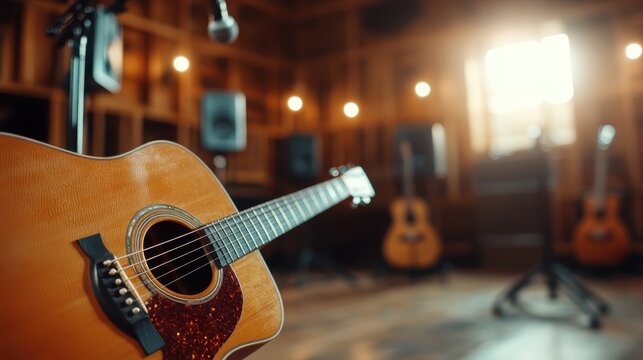
Changes within the music production industry have made it easier for both amateurs and and professionals to express their creativity. For more information regarding digital environments, users can visit the site ufabet เข้าสู่ระบบ to get more information regarding seamless digital environments. The following article discusses the seven shocking trends of music production for the year of 2026 and 2025.
The Music Production Industry Today
In the last 10 years there have been many changes to the music production industry due to the increase in available technology and increased collaboration on a global scale. Because of the availability of digital audio work sites, independent artists have been able to challenge the best produced music from home. Because of the availability of AI technology and cloud colloberation, the creation of music from Ahmedabad to Los Angeles, and every point in between, has become much more accessible.
Within the production industry there has been a shift towards increased production within a shorter time period. Due to the availability of streaming services, larger audiences can be reached and the demand for polished tracks in a more accessible manner. Because of this, a larger versality has been developed within the production industry.
Trend 1: AI-Driven Composition Tools
AI Enhancements in Music Production
AI is now a standard part of music production, and is able to compose and record great arrangements in a matter of minutes. Since Google’s MusicFX and AIVA can process and analyze almost unlimited amounts of data, they can assist YOU in creating arrangements in almost any style, including: Bollywood, EDM, and anything/ everything in between. AI is able to assist YOU in saving record time, (sometimes as much as 40%). AI has also been able to help producers to refine (polish) their arrangements.
AI IS able to help make YOUR music production efforts easier, and quicker. AI can help mimic musical elements you want, including the use of synths and tradition inspired music (for example, Indian Classical music ragas, as well as even fusion music). Music producers have expressed the need to use AI to enhance, not overshadow the music production process.
AI music production includes:
- AI can suggest music tracks to YOU depending on the feelings YOU want to ev0ke.
- AI is also able to adjust the pace and volume of YOUR music in real time.
- Full integration with YOUR D.A.W., which allows YOU to upload or use YOUR arrangements in the D.A.W.
- There is a free version of this technology; however, advanced features can be accessed for a subscription of $20.
- Since this technology is web based, YOU do not need high end or advanced hardware.
Trend 2: Home Studios Are Creating A New Music Economy
Home studios are expected to produce 70% of new music releases in 2026. Some of the most affordable setups include a Focusrite Scarlett audio interface (costing less than $200), a Yamaha HS5 studio monitor, and a DAW (like Reaper) that costs nothing, which means professional sound is possible without having to spend $50 per hour to rent a studio.
The sound of radio-ready music has been achieved in places as far away as Gujarat, where budget-conscious creators have used second-hand marketplaces to purchase synths and microphones. In apartments that have been designed as studios, noise-cancellation plugins may have to be used to mitigate the effects of imperfect acoustics.
- Essential items include a computer (one that has an i5 or better), 16GB of RAM, and solid-state drive storage.
- A good starter cost will be $500 to $1,500, while the software will include a DAW and virtual instruments (e.g., Serum) and effects bundles.
- Quality: Will be high enough to equal the best-pro calibrated professional studios.
- Beginners will benefit from the addition of some MIDI controllers that will provide better tactile control
Trend 3: New Age Remote Collaboration Platforms
The increased usage of remote collaboration tools like Splice, BandLab, and Soundtrap to produce music has allowed musicians to play (or jam) together in real time from anywhere around the world, and has increased remote collaboration 50% in the last year.
After the 2025 global events that have been referred to as a pandemic, there has been a dramatic increase in the hybrid work culture globally. Collaborative teams have been able to share stems, edit mixes, and finalize tracks using video calls.
This encourages diversity by combining Indian folk artists with Western EDM producers for fusion tracks. Version control allows changes without fear of overwriting, similar to Git for programming.
- Standout features: Storage is unlimited, sharing is real-time, AI separation of stems.
- Tools used: Splice (samples), LALAL.AI (track splitting).
- Workflow: Upload core files, add collaborators, edit history.
- Success criterion: 30% decrease in production time.
- Problems solved: Time zones with asynchronous editing.
Mixing Analog with Digital
In the midst of the digital takeover, the analog revival is a nostalgic trend, as evidenced by the record numbers of vinyl sales in 2026. Producers pull out their old tape recorders and modular synths, such as the Moog Mother-32, for that warm saturation that most digital plugins don’t come close to. These hybrid workflows help the analog and digital worlds meet, and their work most certainly pays off.

Also, this resurgence caters to audiophiles who are on the lookout for something different than the sterile digital world we live in.
For record producers, the following is the equipment they need:
- Analog tape delays/ Roland Juno (Hardware)
- Old analog equipment (Software)
- Post-Production (Analog to Digital) (recording process)
- Full and smooth bass; Lower and softer mids (Sound benefits)
- Highs harshly diminished (Cost range) $300 for entry-level synths.
Trend 5: Immersive Spatial Audio
Techniques of Audio Spatial Production
Apple Music and Tidal have added Dolby Atmos audio rendering, which is the most immersive audio feature to date. Tracks are recorded in 3D, and the listener is placed in the center of the music. Because of this, over 60% of the charts have been placed in the atmosphere at the top, and object-oriented panning has been added.
To simulate a concert hall or studio, the rendering is done separately for the right and left channels using headphones. This is possible by closing the Logic Pro with the Apple Spatial Audio toolset.
To get the following specifications from the setup:
Atmos-compatible DAW (audio workstation) and 7.1.4 (audio) setup
- Techniques: Center vocals, surround drums, and synths overhead.
- Export formats: For that, ADM BWF has your back.
- Listener impact: Engagement is 25% higher.
- Learning curve: For videos, YouTube is your best bet.
Trend 6: Sustainable Production Practices
Eco-Friendly Music Production
Sustainability is the new cool ’cause it refuses to take a backseat when it comes to the conscious trend emerging in the production of music. With energy-efficient tools, virtual instruments; LED-lit studios and cloud rendering, one can replace old and energy hungry hardware racks instead of studios and racks in 2026 and in-line with green initiatives. Ninja Tune and other labels require eco reports when artists want to release music ’cause why wouldn’t they.
This is a great shift that should be promoted instead of the disposable.
- Good choices: Solar powered laptops, cables made of recycled materials.
- Software shift: The cloud reduces the amount of computing that is local to the software.
- Industry stats: 40% drop in energy consumption in studios
- Certifications: Eco studios having the ISO 14001 cert
- Consumer appeal: The stickers that say “Green Produced” increase the amount of times people stream the songs.
Trend 7: Blockchain for Rights Management
Blockchain in Music Ownership
Blockchain technology is a first when it comes to securing the payment of royalties through the use of NFTs and Smart contracts for the first time in music production by the use of a mechanism called Audius. Artists are able to \”mint\” their music for \”tokens\” where they get paid immediately and are transparent about the money that they have made without having to deal with people that take 50% of the money. This was evident in 2026 when 30% of the people that have adopted this new technology were Indie music producers.
This new tech is great to determine and prove who the owner is when it comes to copyright infringement and allows for multiple people to receive royalties.
- Platforms: Sound.xyz, Royal.
- Process: Upload your track, define the splits, and execute the necessary contract.
- Benefits: micromonitory payment every time the track is streamed.
- Challenges: Gas fees are lessened through layer-2 solutions.
- Future: DAW plugins will be able to be used.
Practical Tips for Adopting Trends
Aspiring producers should begin with small steps. Try free AI tools and cloud collaborations to start. Once you get better, you can use DistroKid to track your progress. Reach out to others for networking on Reddit’s “WeAreTheMusicMakers” and ask for feedback. Use your time on MasterClass to learn continuously to keep your skills sharp with all the changes going on.
Your primary focus should be your work. Diversion to mundane tasks through automation should be the way you organize your time. This will allow you to focus your energy on the things you enjoy.
Impact on Independent Artists
With the focus shifting away from the majors, innovators now have the opportunity to drive the market. Innovations in home recording technology and remote collaboration tools have created an absence of gatekeeping in the global marketplace. Nucley’s success with Atmos has shown the market that innovation will be the key to success in the future.
This is what we expect to see for the future
We recommend that you preserve your flexibility in order to keep to the rhythm of change. Fully integrated AI systems and virtual reality studios should be available by the year 2027.